
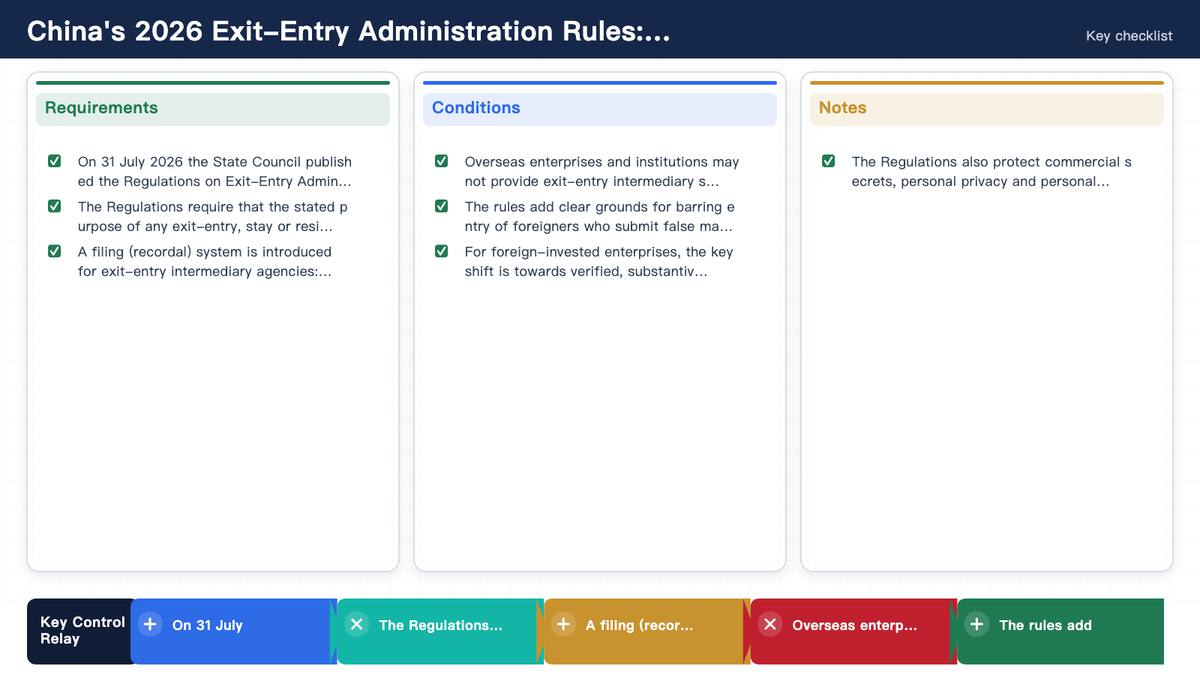
- On 31 July 2026 the State Council published the Regulations on Exit-Entry Administration (State Council Order No. 841), effective 15 September 2026, a 19-article set of rules supplementing the Exit-Entry Administration Law.
2026年7月31日,国务院公布《国务院关于出境入境管理的规定》(国务院令第841号),自2026年9月15日起施行,共19条,是对《出境入境管理法》的补充配套规定。
- The Regulations require that the stated purpose of any exit-entry, stay or residence application be genuine and lawful; immigration authorities may refuse to issue documents or deny entry where false materials or false statements are provided.
《规定》要求出境入境、停留居留的申请事由必须真实、合法;提供虚假材料、作出虚假陈述的,移民管理机构、签证机关有权不予签发出入境证件或不准其出境、入境。
- A filing (recordal) system is introduced for exit-entry intermediary agencies: agencies must file with the local immigration authority within 15 days of establishment, and existing agencies within 90 days of the Regulations taking effect.
《规定》对出境入境中介服务机构实行备案管理:机构应自设立之日起15日内向所在地移民管理机构备案;《规定》施行前已从事中介服务的机构,应在施行之日起90日内办理备案。
- Overseas enterprises and institutions may not provide exit-entry intermediary services in China; lawfully established foreign-invested and Hong Kong, Macao and Taiwan-invested entities in China may.
境外企业、机构不得在中国境内提供出境入境中介服务;在中国境内依法设立的外资和港澳台资企业、机构可以依法从事出境入境中介服务。
- The rules add clear grounds for barring entry of foreigners who submit false materials, make false statements, or were punished for border-control offences, and strengthen anti-sanction and counter-intervention legal linkage.
《规定》明确外国人在境外申请中国签证或在口岸申请入境时提供虚假材料、虚假陈述,或因妨害国(边)境管理受到刑事处罚的,依法不准其入境,并强化反制裁、反干预、反”长臂管辖”的法律衔接。
- For foreign-invested enterprises, the key shift is towards verified, substantive compliance: HR, legal and business teams should jointly verify the purpose, position and itinerary behind visa applications instead of delegating everything to agents.
对外资企业而言,关键变化在于转向核验式、实质性合规:人力资源、法务与业务部门应共同核实签证申请背后的事由、岗位与行程,而非将一切交给代理机构。
- The Regulations also protect commercial secrets, personal privacy and personal information handled by agencies and authorities, giving foreign companies clearer legal safeguards for employee data.
《规定》同时保护主管部门及中介机构处理过程中的商业秘密、个人隐私与个人信息,为外资企业员工数据提供了更清晰的法律保障。
China’s 2026 Exit-Entry Administration Rules: What Foreign Employers Must Prepare For | 中国2026年出境入境管理新规:外资雇主必须准备什么
Why this matters now
On 31 July 2026, the State Council published the Regulations on Exit-Entry Administration (State Council Order No. 841), a compact 19-article regulation that takes effect on 15 September 2026. It sits under the Exit-Entry Administration Law of 2013 and responds to a specific set of problems identified by the authorities: rising safety risks for Chinese citizens travelling abroad, foreign applicants submitting false materials, and a murky intermediary-services sector. The timing is significant — China’s immigration authorities processed 369 million border crossings in the first half of 2026, up 10.8% year on year, an all-time high. For foreign-invested enterprises (FIEs), the regulation matters because it reshapes how visas and residence permits are verified, how intermediaries are regulated, and what employers must do to keep expatriate mobility compliant.
What the new rules change
The Regulations make three adjustments that matter to foreign employers. First, purpose verification is tightened: the stated purpose of an application for entry, stay or residence must be genuine and lawful, and applicants must cooperate when immigration authorities or visa offices verify identity and purpose. Individuals and entities that issue invitation letters or other supporting materials bear responsibility for their authenticity. This is a direct signal that “invitation letter” shortcuts and decorative job descriptions will no longer survive scrutiny. Second, a filing system is created for exit-entry intermediary agencies. Agencies must file with the local immigration authority within 15 days of establishment; those already operating must file within 90 days of the regulation taking effect. Third, the rules enlarge the reasons for denying entry to foreigners — covering false materials, false statements, and prior criminal punishment for obstructing border control — and explicitly strengthen the legal basis for counter-sanctions, counter-interference and countering “long-arm jurisdiction”, giving Chinese authorities new tools that can in principle affect individuals connected to foreign restrictive measures.
What this means for intermediary management
The intermediary filing regime is new and directly relevant to companies using visa agents. Under the rules, overseas enterprises and institutions may not provide exit-entry intermediary services in China, while lawfully established foreign-invested and Hong Kong, Macao and Taiwan-invested entities may. Intermediaries must meet conditions including staff with relevant professional knowledge, premises and funding; they may not publish false information, engage in exaggerated or misleading promotion, provide or assist in providing false materials, or help others improperly obtain visas, stay/residence documents or passports. Penalties include fines of RMB 20,000 to 50,000, suspension of operations and revocation of licences, with responsible individuals pursued. For FIEs, this means due diligence on your agent: confirm it is a licensed domestic entity, verify its filing, and require it to refuse obviously false applications.
Practical steps for foreign employers
- Jointly verify application substance. For every work visa, residence permit or short-term business visit, have HR, legal and the hiring department confirm the genuine purpose, position, dates and itinerary before submission; keep supporting evidence on file.
- Audit your invitation process. If your entity issues invitation letters, standardise who can sign them, what documents must back them, and how authenticity is checked.
- Re-check your visa agent. Confirm the intermediary is a lawfully established domestic entity (including FIE/HK-Macao-Taiwan-invested where applicable), has filed under the new rules, and will refuse false-material requests.
- Plan for longer lead times. Because material review is stricter, expect longer processing windows for visas and permits; build buffer into travel and onboarding schedules.
- Prepare for the September 2026 transition. Existing intermediary relationships should be re-documented by the 90-day filing deadline; update HR policies and employee handbooks for the new authenticity requirements.
- Protect employee data. Review how visa application data flows through your agent and intermediaries, and confirm confidentiality measures align with the regulation’s protections for personal privacy and information.
Risks and compliance notes
The regulation’s emphasis on authenticity means the biggest risk is the “rubber-stamp” application: an invitation letter that does not match a real job, a position title inflated for visa purposes, or a declared itinerary that no one intends to follow. These now carry refusal and, for intermediaries, penalty consequences. Companies should also note the counter-sanctions linkage — entities or individuals connected to foreign restrictive measures against China may face entry bars, so global mobility planning should account for geopolitical exposure. Finally, the 24-hour lodging registration duty, visa-free transit rules and this regulation work together; an employer that treats them as separate workstreams is more likely to miss a deadline than one that coordinates immigration, HR and legal.
中国2026年出境入境管理新规:外资雇主必须准备什么
为什么当下重要
2026年7月31日,国务院公布《国务院关于出境入境管理的规定》(国务院令第841号),这是一部精炼的19条行政法规,自2026年9月15日起施行。它以2013年《出境入境管理法》为基础,回应主管部门认定的几类具体问题:中国公民出境安全风险上升、少数外国人提交虚假材料、中介服务行业底数不清。时机意义显著——2026年上半年,全国移民管理机构查验出入境人员3.69亿人次,同比上升10.8%,创历史新高。对外资企业而言,这部规定之所以重要,在于它重塑了签证与居留许可的核验方式、中介的监管方式,以及雇主为保持外派人员流动合规必须做的工作。
新规改变了什么
《规定》做出三项对外资雇主有实际影响的调整。第一,事由核验收紧:申请入境、停留居留的事由必须真实、合法,申请人须配合移民管理机构、签证机关核实身份与事由;出具邀请函件或其他申请材料的单位或个人对真实性负责。这是一个直接信号——”邀请函”捷径与装饰性岗位描述将不再经得起审查。第二,对出境入境中介服务机构建立备案制度:机构应自设立之日起15日内向所在地移民管理机构备案;已经从事中介服务的,应在规定施行之日起90日内办理备案。第三,扩大外国人不准入境的情形——覆盖虚假材料、虚假陈述、因妨害国(边)境管理受到刑事处罚——并明确强化反制裁、反干预、反”长臂管辖”的法律基础,为相关部门提供了原则上可影响与外国限制性措施相关人员的工具。
对中介管理意味着什么
中介备案制度是全新的,与使用签证代理的企业直接相关。依规,境外企业、机构不得在中国境内提供出境入境中介服务;在中国境内依法设立的外资和港澳台资企业、机构可以依法从事。中介须具备条件,包括具有相关专业知识的工作人员、相适应的场地与资金保障;不得发布虚假信息、夸大或误导宣传、提供或协助提供虚假材料、协助他人违规办理签证、停留居留证件或护照。处罚包括2万元至5万元罚款、责令停业整顿、吊销证照,相关责任人员一并追责。对外资企业而言,这意味着要对代理做尽职调查:确认其为持牌境内实体、核验其备案、并要求其拒绝明显虚假的申请。
外资雇主的操作步骤
- 共同核验申请实质。 对每份工作签证、居留许可或短期商务访问,由人力资源、法务与用人部门在提交前共同确认真实事由、岗位、日期与行程,并存档支撑材料。
- 审计邀请流程。 如贵实体出具邀请函,规范谁可签署、需要哪些文件支撑、真实性如何核验。
- 复核签证代理。 确认中介为依法设立的境内实体(适用时包括外资及港澳台资),已按新规备案,并会拒绝虚假材料请求。
- 预留更长周期。 由于材料审查趋严,预计签证与许可办理窗口将拉长;为差旅与入职计划预留缓冲。
- 为2026年9月过渡做好准备。 现有中介关系应在90日备案截止日前重新文件化;按新真实性要求更新HR政策与员工手册。
- 保护员工数据。 审查签证申请数据在代理与中介间的流转,确认保密措施符合规定对个人隐私与信息的保护。
风险与合规提示
《规定》对”真实性”的强调意味着最大风险是”盖章式”申请:与真实岗位不符的邀请函、为签证目的虚高的职位头衔、或无人打算践行的申报行程。这些现在会导致拒签,并可能对中介产生处罚后果。企业还应注意反制裁联动——与针对中国的外国限制性措施相关的实体或个人可能面临入境限制,全球流动性规划应计入地缘政治敞口。最后,24小时住宿登记义务、过境免签规则与本规定相互配合;一个将三者割裂处理的企业,比一个将移民、HR与法务协同起来的企业更容易错过时限。
Sources
- 中国政府网(国务院公报)《国务院关于出境入境管理的规定》(国务院令第841号,2026-07-31公布,2026-09-15施行,19条全文):<https://big5.www.gov.cn/gate/big5/www.gov.cn/gongbao/2026/issue_12906/202608/content_7077791.html>
- 梁河县人民政府官网转载新华社《〈国务院关于出境入境管理的规定〉发布》(含四方面主要内容):<https://www.dhlh.gov.cn/wtj/Web/_F0_0_6OS92QDV65F3DAB1A4B54F0784.htm>
- 贵州省商务厅官网《国门畅流映开放,商务视角看新规》(2026-08-13,专家圆桌论道对外资企业影响):<https://swt.guizhou.gov.cn/xwzx/qgyw/202608/t20260813_90731591.html>
- 上海市人民政府外事办公室《上海资讯周报》涉外资讯(2026-08第3期:司法部、公安部、国家移民局负责人就《国务院关于出境入境管理的规定》答记者问):<https://www.sohu.com/a/1064551572_121106832>